

How Asset Management Tracking Systems Help Malaysian SMEs Run Leaner and Smarter

Do you truly know where your business assets are right now, and whether they are being used efficiently? For many Malaysian SMEs, equipment goes missing, maintenance gets missed, and asset purchases are duplicated simply because there is no structured system tracking what the business owns and where it sits at any given moment. This article highlights the costly impacts of poor asset management on business operations and the benefits of an integrated asset tracking solution within the ERP ecosystem.

Key Takeaways

  • Poor asset management practices, such as relying on manual spreadsheets and memory, often lead to inaccurate records, misplaced assets, and difficulties tracking maintenance schedules and depreciation.
  • A good asset tracking system enables businesses to accurately record and update asset information using modern tracking technologies such as barcode scanning, QR codes, and RFID.
  • Integrating asset management software with an ERP system provides a centralised view of asset information alongside data from other business modules.

Table of Contents

The Hidden Cost of Poor Asset Management in Malaysian Businesses

Asset management is one of those operational areas that business owners often overlook until it becomes expensive. Whether you run a manufacturing plant in Penang, a distribution warehouse in Shah Alam, or a professional services firm in Kuala Lumpur, your physical and digital assets represent a significant portion of your capital investment. Machinery, vehicles, IT equipment, tools, and furniture all carry real value on your books, yet many businesses manage them through spreadsheets, handwritten logs, or simply from memory.

The consequences of this approach compound over time. Assets that are not tracked frequently get lost, stolen, or left idle in the wrong location. Maintenance schedules slip, leading to unexpected breakdowns that halt production or service delivery at the worst possible moment. And when it comes to tax and regulatory compliance, particularly when LHDN scrutinises your asset depreciation schedules or you need to reconcile fixed assets for your annual audit. Poorly maintained records create headaches that cost both time and money to resolve.

Businesses that implement structured asset tracking systems report measurable improvements in equipment utilisation, reduced downtime, and stronger compliance with financial reporting requirements. The challenge for Malaysian SMEs is not the lack of awareness. Most business owners understand they should be tracking their assets more rigorously. The real barrier is having an asset management system that is practical enough to implement without a dedicated IT team, integrated enough to connect asset data with the rest of the business, and mobile-friendly enough for staff on the ground to use without friction.

What a Modern Asset Management Tracking System Actually Does

A proper asset tracking system goes well beyond a list of equipment in a spreadsheet. Today’s solutions use barcode scanning, QR codes, and RFID technology to give every asset a unique digital identity. From the moment an asset is procured and registered in the system, its entire lifecycle is recorded: location, assigned user, maintenance history, depreciation value, and eventual disposal.
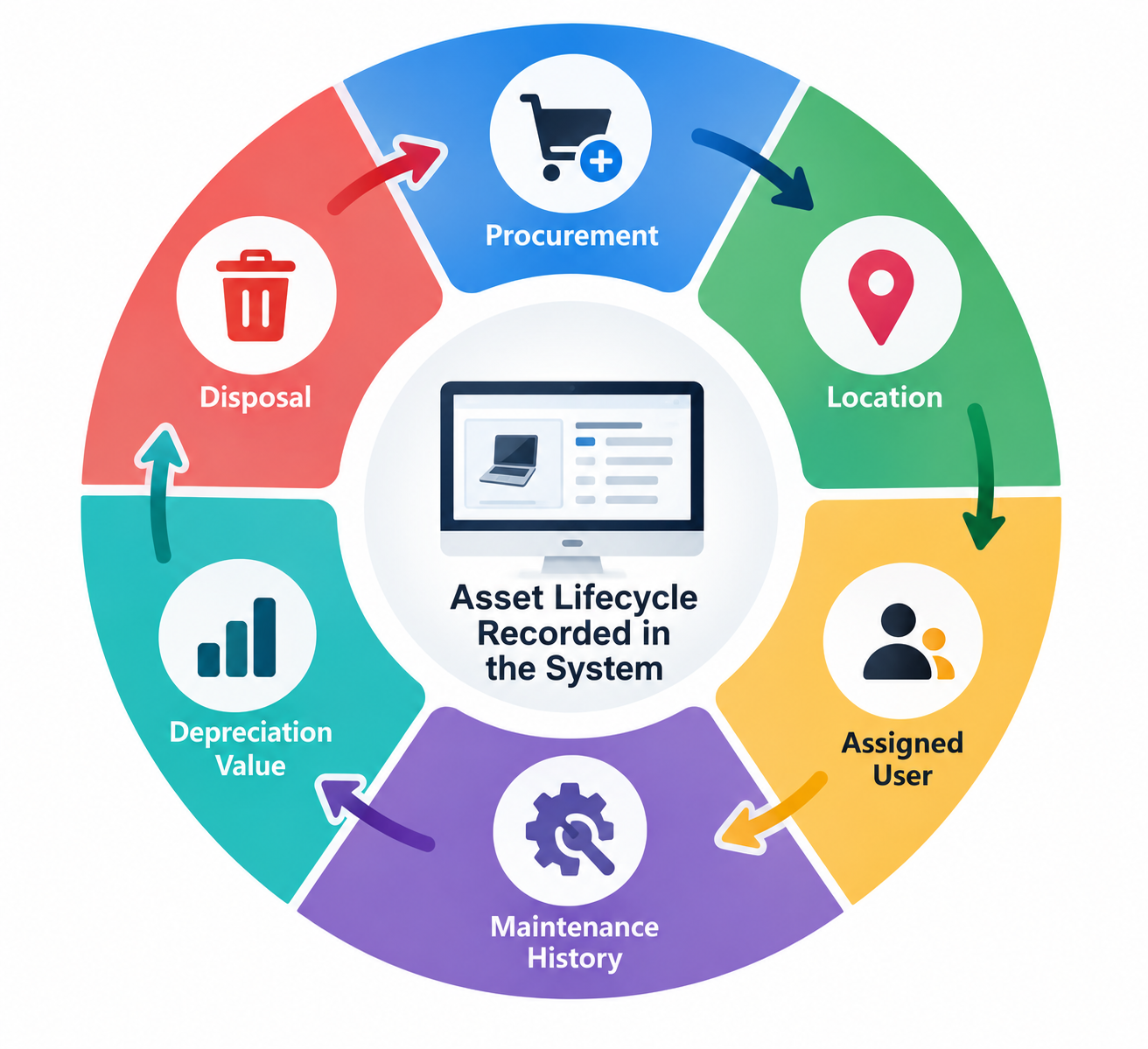
asset lifecycle recorded in the system

For Malaysian businesses operating across multiple sites or managing field teams, real-time location tracking is particularly valuable. A construction company managing equipment across several project sites in Johor, Selangor, and Pahang no longer needs to rely on phone calls to find out where its excavators are. A trading company can verify that delivery vehicles are where they should be without manual check-ins.

This kind of visibility reduces asset loss, prevents unauthorised use, and helps management make smarter decisions about resource allocation. Key capabilities that a modern asset management tracking system should provide include:

  • Asset registration and tagging: assigns a unique identifier to every item from point of purchase
  • Real-time location monitoring: tracks asset locations in real time, especially valuable for multi-site operations
  • Maintenance scheduling and alerts: automated reminders for servicing, calibration, and inspections before breakdowns occur
  • Depreciation tracking: calculates asset value over time using LHDN-accepted depreciation methods for accurate financial reporting
  • Audit trails: a full history of who used, moved, or modified an asset, critical during audits or insurance claims
  • Disposal and write-off management: records when assets are retired, sold, or written off to keep the fixed asset register accurate

Unplanned equipment downtime costs businesses significantly more than scheduled maintenance. In manufacturing, a single breakdown on a critical production line can disrupt deliveries, damage customer relationships, and erode margins.

Why Asset Management Must Be Integrated With Your ERP

Here is where many Malaysian businesses make a costly mistake: they implement a standalone asset tracking tool that operates in isolation from the rest of the business. Data lives in one silo, finance data lives in another, and operations managers are still manually reconciling the two. The result is duplication of effort, inconsistent records, and a persistent gap between what the system says and what is actually happening on the ground.

True operational efficiency comes from integrating asset management directly within your ERP system. When asset data flows into your finance module, depreciation entries are posted automatically, keeping your balance sheet accurate without manual journal entries at month-end. When a maintenance job is triggered, it can automatically generate a purchase requisition for spare parts, link to your vendor records, and update inventory levels, without anyone needing to chase approvals across departments.

For businesses preparing for LHDN e-Invoicing compliance, having clean and integrated asset records is increasingly important. Capital asset purchases, disposal proceeds, and leasing arrangements all have tax implications, and a disjointed system makes it harder to produce the accurate documentation that LHDN and your auditors require.

SMURPS is built on exactly this principle. The SMURPS ERP module includes asset management as a native component, not a bolt-on addition. When you register a new asset in SMURPS, it simultaneously updates your fixed asset register, triggers your depreciation schedule, and is immediately visible to finance, operations, and management, all in real time. Maintenance alerts are automated, and mobile access means your technicians and site managers can update asset status directly from their phones, eliminating the paper-based delays that slow down most businesses.

6 Practical Steps for Malaysian SMEs to Improve Asset Management Today

You do not need to overhaul your entire operation overnight. The most successful implementations start with a clear baseline and build systematically from there. Here is a practical framework for SMEs looking to strengthen their asset management practices:

  1. Conduct a physical asset audit first: before implementing any system, walk through your premises and verify what you actually own against what is on your books. Many businesses discover significant discrepancies.
  2. Categorise and prioritise: not every stapler needs RFID tracking. Focus your most rigorous monitoring on high-value assets, critical production equipment, and anything with significant depreciation or insurance value.
  3. Assign ownership clearly: every tracked asset should have a named person responsible for it. This accountability alone reduces loss and misuse substantially.
  4. Automate maintenance schedules: use your system to set maintenance intervals based on usage hours or calendar dates, with alerts routed to the right people, not just the IT department.
  5. Connect asset data to finance: ensure depreciation calculations, asset additions, and disposals flow directly into your accounts without manual re-entry, especially before financial year-end.
  6. Train your team on mobile access: the best system delivers nothing if staff revert to spreadsheets. Mobile-friendly tools with simple scanning interfaces dramatically improve adoption on the ground.
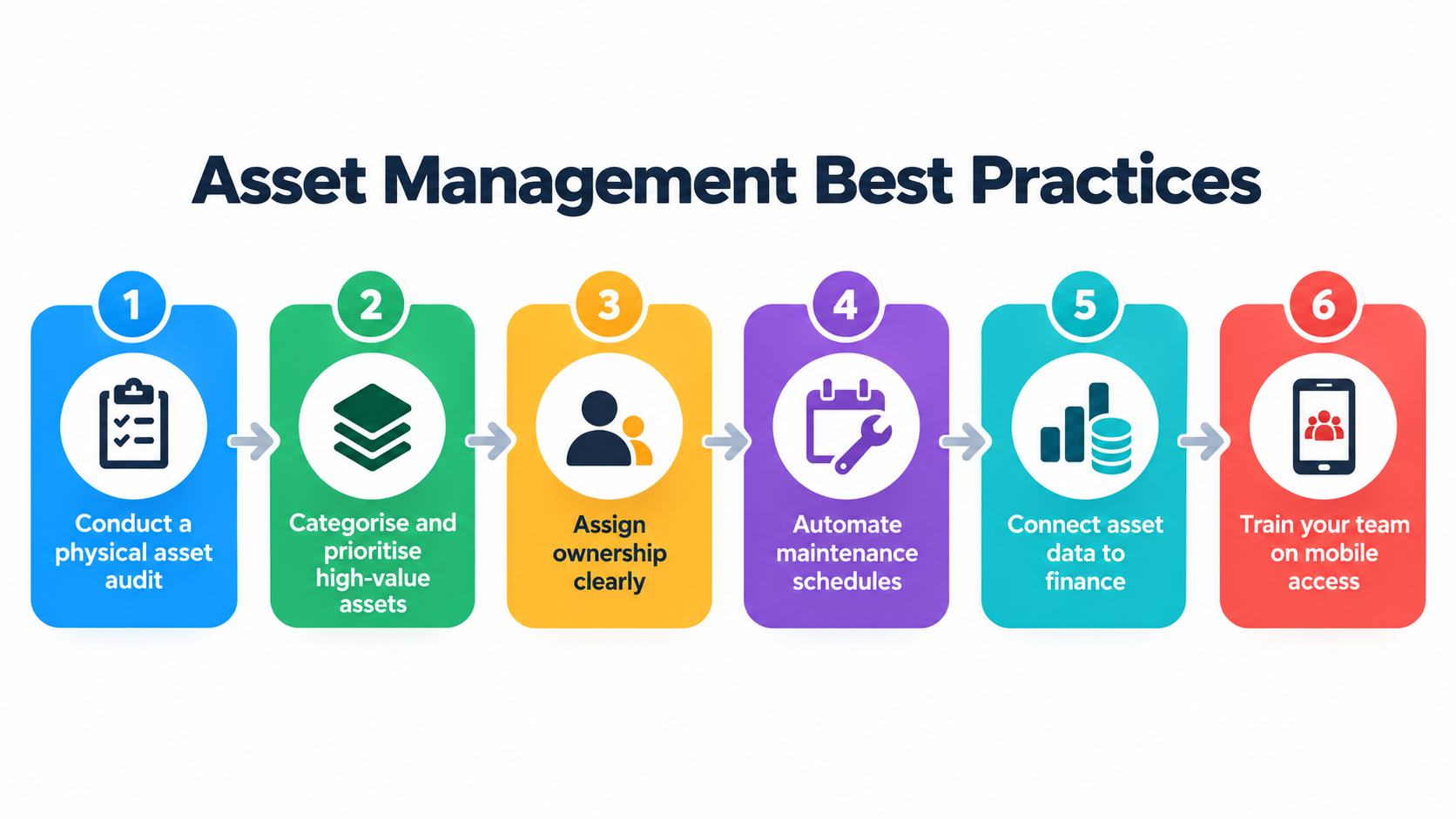
6 best practices of asset tracking management

For Malaysian SMEs, the competitive advantage is not just in buying the right assets. It is in maximising the return on those assets through disciplined tracking, proactive maintenance, and integrated financial management.

Conclusion

Asset management tracking is not a luxury reserved for large corporations with dedicated facilities teams. For Malaysian SMEs competing in tight-margin industries, knowing exactly what you own, where it is, and how it is performing is a genuine operational advantage. Poor asset visibility leads to unnecessary capital expenditure, compliance risks, and operational disruptions that erode profitability over time.

The solution lies in moving beyond disconnected spreadsheets towards an integrated approach where asset data is live, accurate, and connected to the financial and operational heartbeat of your business. SMURPS brings together ERP, automation, mobile access, and analytics into a single platform purpose-built for Malaysian businesses, giving you the asset visibility and control you need to run leaner, smarter, and with greater confidence.

Frequently Asked Questions

What counts as a business asset?

A business asset is any item of economic value owned by your business, including machinery, vehicles, computers, office furniture, tools, and even intangible assets like software licences.

Yes. Even with 20 assets, manual tracking creates errors. A system pays for itself quickly through reduced losses and better maintenance planning.

If equipment is lost, damaged, or stolen, a digital asset register gives you instant access to purchase records, serial numbers, and current valuations — exactly what insurers require to process claims quickly and accurately. Without this documentation, claims are delayed or underpaid.

Yes. Cloud-based systems like SMURPS allow you to manage assets across warehouses, branches, or job sites in real time from a single dashboard.

Inventory tracks goods intended for sale. Asset tracking covers items your business owns and uses operationally over a longer period.

The system applies your chosen depreciation method automatically each period, updates the net book value, and posts the journal entry. No manual calculation needed.

RFID tags can be read without line-of-sight and scanned in bulk from a distance, making them suited to high-volume or automated environments like warehouses. Barcodes and QR codes are lower cost and sufficient for most SMEs doing periodic manual checks using a mobile device.

The system records the disposal, calculates any gain or loss, removes it from the active register, and updates your financial statements accordingly.

The system records the disposal, calculates any gain or loss, removes it from the active register, and updates your financial statements accordingly.

For most SMEs, a basic implementation with data migration can be completed within a few weeks. Starting with a modular ERP platform like SMURPS means you can go live with asset management first and activate additional modules as your business grows.