What Is E-Invoicing in Malaysia? How Electronic Invoicing Works in 2026
As Malaysia’s mandatory e-Invoice implementation expands across all business sectors, SME owners are grappling with understanding what electronic invoicing actually means for their operations. Beyond mere compliance, Malaysia’s electronic invoice system represents a fundamental shift in how businesses manage their financial transactions and interact with LHDN.
Understanding E-Invoicing in the Malaysian Context
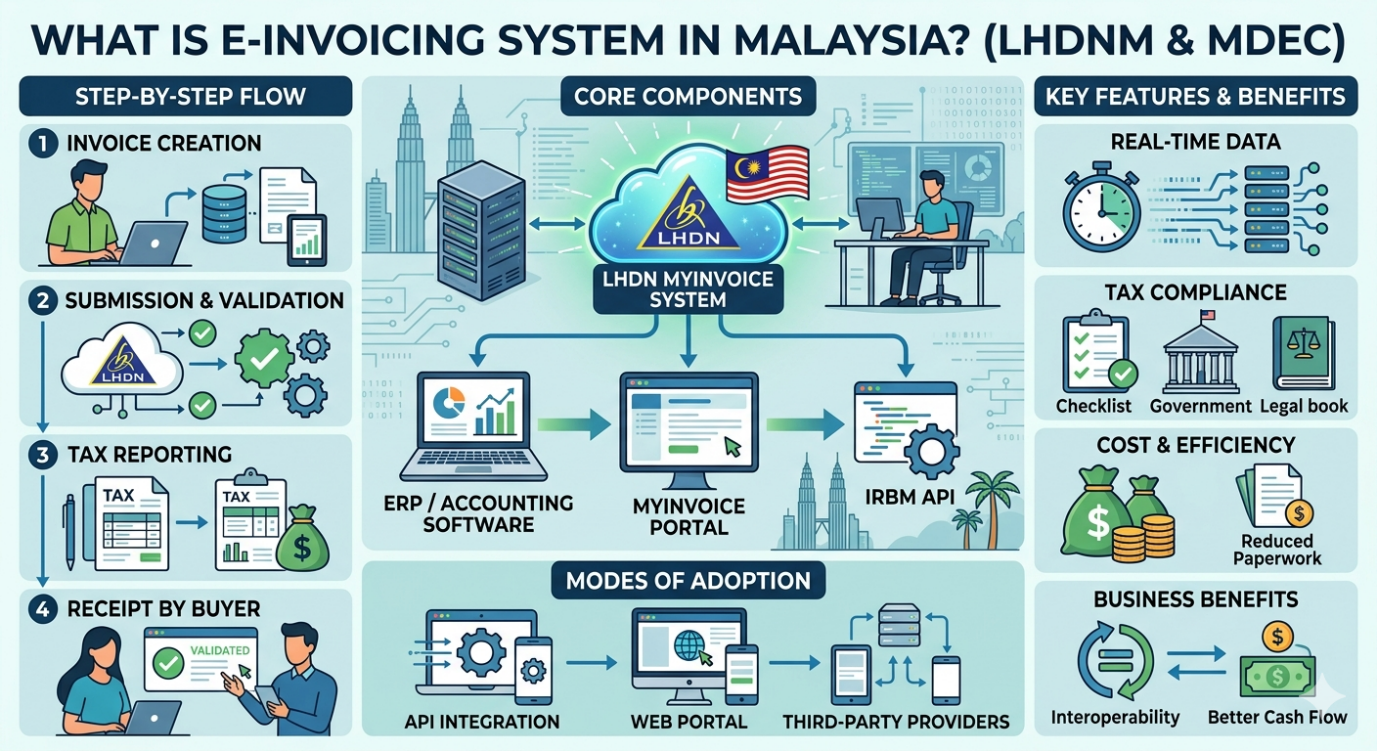
An e-invoicing system is a digital platform that creates, transmits, and processes invoices electronically in a structured format that can be automatically read and processed by both sender and recipient systems. In Malaysia’s context, this goes beyond simple PDF invoices sent via email.
LHDN’s e-Invoice framework requires invoices to be generated in a specific structured format and transmitted through approved channels. The system captures transaction data in real-time, providing tax authorities with immediate visibility into business transactions while streamlining the invoicing process for companies.
“Electronic invoicing eliminates manual data entry errors and reduces invoice processing time by up to 80%, while ensuring full compliance with Malaysian tax regulations.”
The key difference from traditional invoicing lies in automation and standardisation. Where paper invoices required manual creation, printing, posting, and manual data entry on the recipient’s end, an e-invoicing system like SMURPS can handle these processes automatically through structured data exchange.
How Electronic Invoicing Works in Malaysia
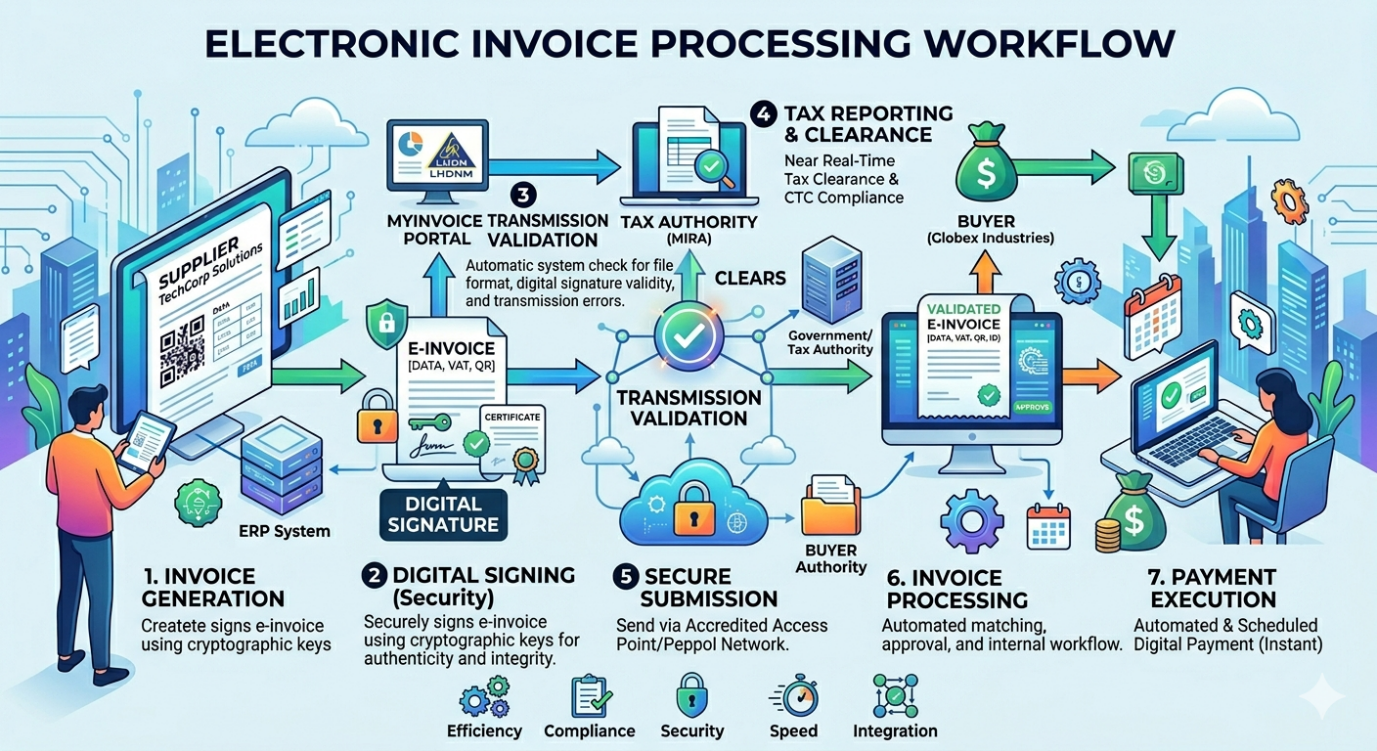
Malaysia’s e-Invoice system operates through a hub-and-spoke model where businesses either connect directly to LHDN’s MyInvois platform or use certified third-party solutions. Here’s how the process works:
- Invoice Generation: The system automatically creates invoices in the required structured format (typically JSON or XML) based on transaction data
- Digital Signing: Invoices are digitally signed to ensure authenticity and prevent tampering
- Validation: LHDN validates the invoice format and content in real-time
- Processing: Recipients can automatically process invoices through their accounting software, eliminating manual data entry
For SMEs, this means invoicing becomes part of an integrated workflow where sales orders, delivery notes, and invoices are connected digitally. Modern accounting software with e-Invoice capabilities can automatically generate compliant invoices from existing transaction data.
Mandatory Implementation Timeline and Business Impact
LHDN’s phased rollout means different business categories face mandatory e-Invoice implementation at different times. Large corporations were required to comply first, with the mandate gradually extending to medium and small enterprises based on annual turnover thresholds.
The business impact extends beyond compliance. Electronic invoicing fundamentally changes how companies manage their accounts receivable and payable processes.
On the procurement side especially where supplier invoices are high volume, understanding how an ERP system for procurement works can help streamline the entire purchase-to-pay cycle alongside e-invoicing compliance. Businesses report faster payment cycles, reduced disputes due to clearer invoice data, and improved cash flow visibility.
“Companies implementing e-invoicing typically see invoice processing costs drop by 60-70% while achieving 99.5% accuracy rates compared to manual processes.”
For Malaysian SMEs, this represents both a challenge and an opportunity. While initial implementation requires investment in systems and training, the long-term benefits include reduced administrative costs, faster payment processing, and better financial visibility.
Choosing the Right E-Invoicing System
SMEs have several options for e-Invoice compliance. They can use LHDN’s free MyInvois portal for basic needs, or implement integrated accounting software that handles e-invoicing alongside other business processes.
The key considerations include transaction volume, integration with existing systems, and additional features like inventory management or analytics. Businesses processing high volumes of invoices benefit significantly from an e-invoicing system that integrates with their ERP system.
To understand how integration works on the finance side, read our guide on ERP for finance and accounting.
Modern digital business platforms can automatically generate e-Invoices from sales transactions, update inventory levels, record payments, and provide real-time analytics on cash flow and customer payment patterns. This integration eliminates data silos and provides business owners with comprehensive visibility across their operations.
Benefits Beyond Compliance
While regulatory compliance drives initial adoption, the strategic benefits of e-invoicing extend far beyond meeting LHDN requirements. Electronic invoicing provides real-time visibility into sales performance, customer payment behaviour, and cash flow patterns. Businesses can leverage this data for better decision-making, such as identifying slow-paying customers, optimising payment terms, or forecasting cash flow more accurately. Integration with mobile platforms allows business owners to monitor invoicing and payment status from anywhere, crucial for Malaysia’s increasingly mobile business environment. The automation capabilities also free up staff time from manual invoice processing, allowing them to focus on value-added activities like customer relationship management or business development.Preparing Your Business for E-Invoicing Success
Successful implementation of an electronic invoice system requires more than just software installation. Businesses need to review their current invoicing processes, train staff on new procedures, and ensure their accounting software can handle the increased data volume and automation.
The transition also presents an opportunity to digitise other business processes. Companies that implement e-invoicing as part of a broader digital transformation often see greater returns on their investment through improved operational efficiency and better business insights.
Conclusion
E-invoicing in Malaysia represents a significant shift towards digital business operations that extends well beyond tax compliance. SMEs that embrace electronic invoicing as part of an integrated digital platform position themselves for improved efficiency, better cash flow management, and enhanced business insights that drive growth in an increasingly competitive market.Ready to Digitise Your Business?
Transform your invoicing process with SMURPS, a modular digital business platform that seamlessly integrates an LHDN-compliant e-invoicing system with ERP, analytics, AI, mobile, and automation capabilities. SMURPS E-Invoicing allows you to get real-time visibility across your entire business while ensuring full regulatory compliance.
📩 Reach us at hello@smurps.com or visit smurps.com to book a free demo.