What Is An ERP System for Procurement for Malaysian SMEs? The Benefits & How It Works
ERP purchasing refers to the purchasing function within an ERP system. Every Malaysian SME owner knows the frustration of scattered supplier records and manual purchase orders. ERP software for procurement brings these steps into a clearer workflow giving your team the clarity and control to make procurement a genuine business advantage.
- What Is an ERP System for Procurement?
- How Does an ERP System Streamline Procurement Activities?
- ERP Procurement vs Purchasing Software: What’s the Difference?
- What Are the 5 Core Components of a Procurement ERP System?
- Implementation Strategy for Malaysian Businesses
- What Are the Benefits of ERP for Procurement for Malaysian SMEs?
- What Are the Challenges of Procurement ERP?
- How to Implement Procurement ERP for Malaysian Businesses
- Conclusion
What Is an ERP System for Procurement?
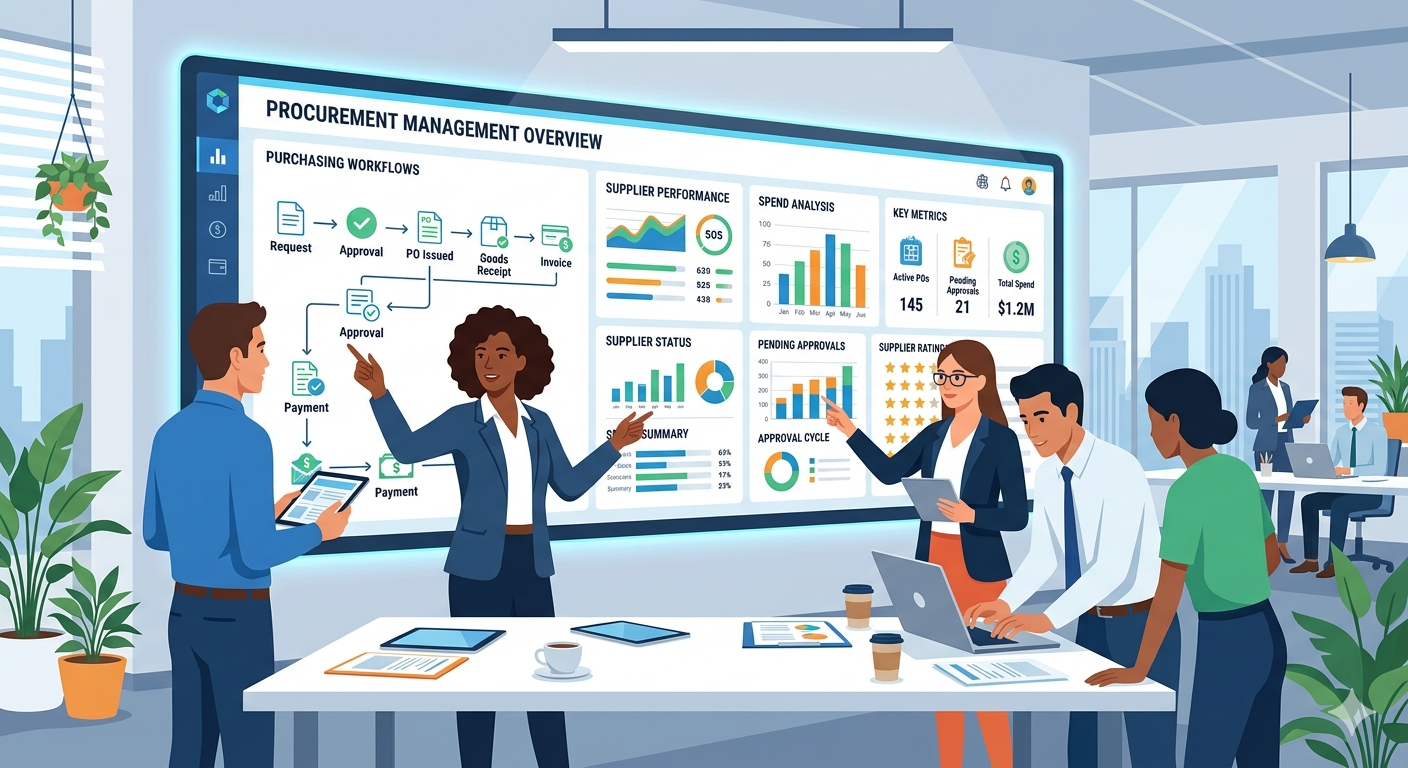
An ERP system for procurement is a software platform that helps businesses manage purchasing activities in one connected system, from purchase requests and supplier selection to purchase orders, goods receiving, invoice matching, and supplier payments. In Malaysia, this helps local SMEs replace scattered spreadsheets, email approvals, and manual follow-ups with a more structured and holistic workflow.
With a procurement ERP system like SMURPS Procurement Management, businesses can integrate procurement seamlessly with inventory, finance, and operations, giving teams complete visibility and control over every ringgit spent.
“Companies using integrated procurement systems report up to 15% reduction in procurement costs and 25% faster processing times compared to manual processes.”
How Does an ERP System Streamline Procurement Activities?
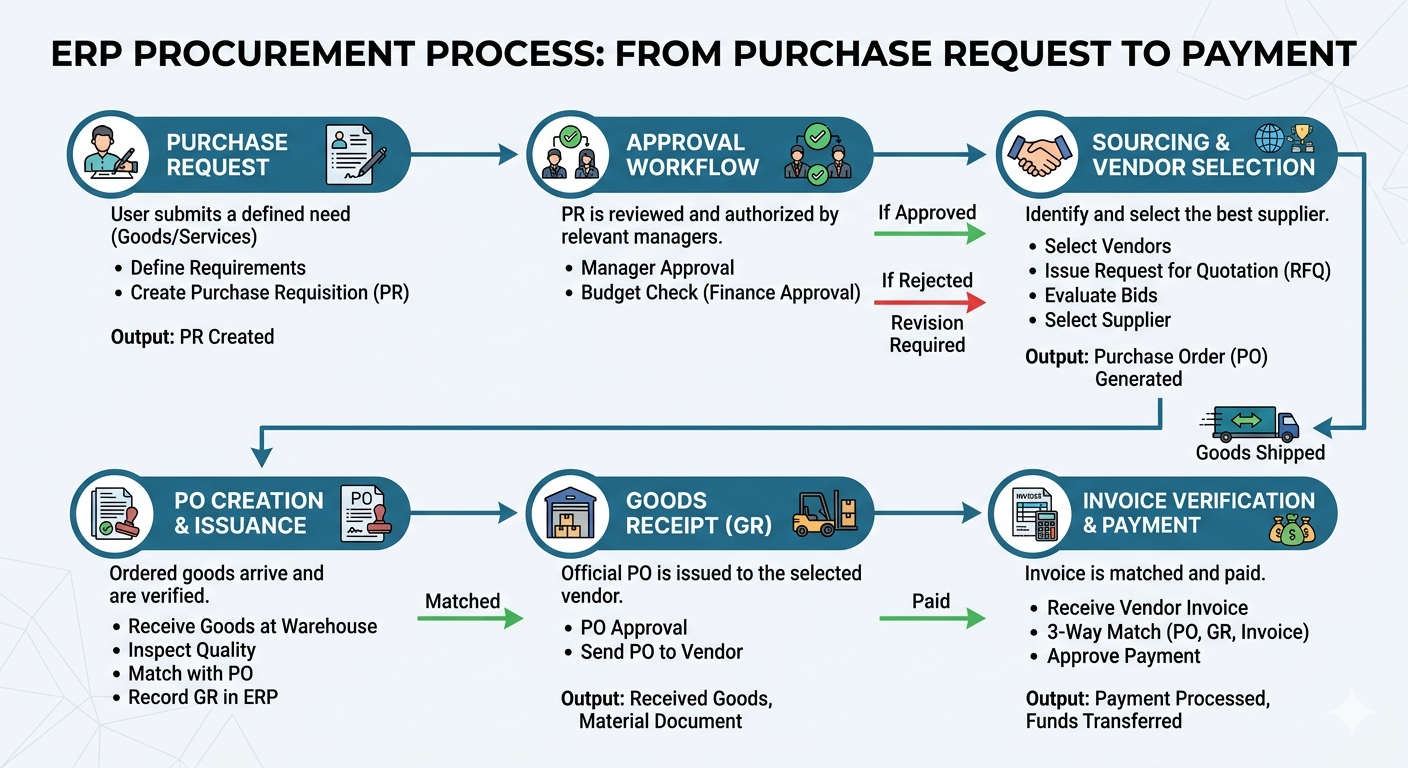
An ERP system streamlines procurement activities by turning manual purchasing steps into a connected workflow. Once a purchase request is submitted, the system can route it to the right approver, generate a purchase order after approval, record goods received, and match supplier invoices against the purchase order before payment is processed.
This reduces the need for repeated follow-ups between procurement, inventory, and finance teams. Each department can see the same updated information, including what has been requested, approved, ordered, received, and billed.
ERP Purchasing vs Purchasing Software: What’s the Difference?
Purchasing software helps teams organise day-to-day buying tasks, such as raising requests, creating purchase orders, storing supplier information, and tracking order progress. It keeps the purchasing process more structured, but it may not always connect with other business functions such as finance, inventory, and operations.
A procurement ERP system provides a broader view. It links purchasing workflows with inventory records, finance data, approval rules, invoice checks, and business reporting. This means teams can see how each purchase affects stock levels, budgets, supplier payments, and overall spending.
For growing Malaysian SMEs, this makes procurement easier to control. Instead of treating purchasing as a separate admin task, the business can manage procurement as part of a larger operational and financial workflow.
What Are the 5 Core Components of a Procurement ERP System?
ERP software for procurement is made up of several interconnected modules that help businesses manage the full purchasing process with better control and accuracy.
- Purchase Requisition Management: Employees can submit purchase requests through standardised forms, with automatic approval routing based on the company’s business rules, department structure, or spending limits.
- Supplier Management: A centralised database keeps important details such as supplier information, contracts, performance records, and payment terms in one place.
- Purchase Order Processing: Approved purchase requests can be converted automatically into purchase orders with real-time tracking from creation to delivery.
- Goods Receipt and Invoice Matching: Three-way matching ensures what was ordered, received, and billed for are aligned before payment is processed.
- Spend Analytics: Real-time procurement reports help businesses track purchasing patterns, supplier performance, and potential cost-saving opportunities.
SMURPS’s Procurement Management module brings these components together in a single connected platform—from centralised purchase requests and automated PO conversion to side-by-side supplier quotation comparisons and full audit trails. Every step is traceable, and every ERP purchasing decision is backed by real-time data.
For Malaysian businesses, this integration becomes particularly valuable when dealing with SST calculations, LHDN e-Invoicing requirements, and multi-currency transactions with regional suppliers. The system automatically applies correct tax rates and generates compliant documentation.
What Are the Benefits of ERP for Procurement for Malaysian SMEs?
Implementing ERP software for procurement does more than replace paperwork. It gives businesses control over spending, compliance, and supplier performance that manual processes simply cannot provide. Malaysian SMEs report measurable gains across four areas:
- Improved Cost Control and Spend Visibility: ERP gives businesses a clearer view of where every ringgit is going before the month closes. With spend data organised by supplier, department, branch, or purchase category, SMEs can spot repeated purchases, compare supplier pricing, identify bulk-buying opportunities, and negotiate based on actual records instead of estimates.
- Better Compliance and Audit Readiness: Procurement records are important for SST reporting, internal reviews, and LHDN-related documentation. With automated approval workflows and timestamped records, each purchase order, invoice, and approval step is easier to trace. This helps businesses keep cleaner documentation and reduces the stress of preparing records manually when reviews are needed.
- Stronger Supplier Relationship Management: A procurement ERP system helps businesses track supplier details, quotation history, delivery timelines, payment terms, and past performance. This makes supplier reviews more practical because teams can see which vendors deliver reliably, which ones cause delays, and where better terms may be negotiated.
- Faster Approvals with Fewer Bottlenecks: Manual approvals can delay urgent purchases, especially when requests are stuck in emails, messages, or waiting for the right person to respond. ERP approval workflows help route requests to the right decision-makers faster. For SMEs that depend on timely stock replenishment or supplier deliveries, this can reduce delays that affect operations.
- Seamless Coordination Between Procurement, Inventory, and Finance: Every purchase affects more than the purchasing team. It can influence stock availability, supplier payments, cash flow, tax records, and financial reporting. By connecting procurement with inventory and finance, ERP helps teams work from the same records and reduce confusion between what was requested, ordered, received, invoiced, and paid.
“With a more structured procurement workflow, Malaysian SMEs can reduce manual follow-ups, improve spending clarity, and keep purchasing records easier to review for finance, tax, and audit needs.”
What Are the Challenges of a Procurement ERP System?
Implementing procurement ERP requires businesses to review their current purchasing process, prepare key records, and align different teams around a more structured way of working. For Malaysian businesses, the main areas to consider include data preparation, approval setup, system integration, user training, and future scalability.
- Preparing Supplier and Item Records: Before implementation, businesses need to review supplier profiles, item lists, pricing records, payment terms, and purchase history. Having consistent information helps the system support smoother purchasing workflows and more accurate reporting.
- Standardising the Purchasing Process: Procurement ERP works best when purchase requests, approvals, purchase orders, goods receipt, and invoices follow a clear process. Teams may need time to adjust from familiar working methods to a more standardised workflow.
- Setting Approval Rules That Fit the Business: Approval workflows should reflect the company’s structure, spending limits, departments, and operational needs. A practical setup helps purchase requests move efficiently while still maintaining the right level of oversight.
- Connecting Procurement With Finance and Inventory: Procurement is closely linked to stock availability, supplier payments, cash flow, SST records, LHDN e-Invoicing, and financial reporting. During implementation, these connections should be planned carefully so information flows properly between teams.
- Training Different User Groups: A procurement ERP system may involve managers, finance teams, warehouse staff, department heads, and requesters. Training helps each user understand their role in the workflow, from submitting requests to reviewing approvals and updating purchase records.
- Choosing the Right ERP Platform That Supports Growth: As the business grows, procurement needs may expand to include quotation comparison, multi-branch purchasing, reporting, inventory integration, or manufacturing support. Choosing a modular ERP platform allows the system to grow with the business over time.
How to Implement Procurement ERP for Malaysian Businesses
Implementing an ERP system for procurement starts with understanding how your business currently manages purchasing, approvals, suppliers, inventory, and payments. Begin by mapping your existing workflow, from identifying a need to processing supplier payment.
Consider your industry requirements carefully. Manufacturing SMEs need tight integration with production planning and inventory management, while trading companies prioritise multi-location stock tracking and supplier performance analytics. Service businesses often focus on indirect procurement and expense management capabilities.
The key lies in choosing a modular platform that grows with your business. As your procurement needs evolve, you can add advanced features like AI-powered demand forecasting, automated supplier risk assessment, or predictive analytics for cost optimisation.
SMURPS is built with exactly this scalability in mind. Its procurement management solution connects natively with the Inventory, Finance, Manufacturing, and Analytics modules—so as your business grows, your procurement capabilities grow with it, without switching platforms or losing historical data.
Conclusion
As Malaysian SMEs grow, procurement needs to be managed with clearer processes, proper records, and stronger coordination across teams. An ERP system helps organise purchasing, supplier management, approvals, stock updates, and finance-related documentation in a more structured way.
With SMURPS Procurement Management, businesses can connect procurement with inventory, finance, manufacturing, and analytics, giving them a scalable foundation to manage purchasing more confidently as operations expand.
Ready to Digitise Your Business?
Stop wrestling with manual procurement processes that drain time and resources. SMURPS brings together ERP, analytics, AI, mobile, and automation in one modular platform designed specifically for Malaysian SMEs. From automated purchase orders to supplier performance analytics, transform your procurement into a competitive advantage.
📩 Reach us at hello@smurps.com or visit smurps.com to book a free demo.